“I Want to Examine the World with My Own Eyes and Play Back This Era Frame by Frame”“我要用我的眼睛审视世界,将这个时代逐格播放”
——写在“视觉暂留:陈雄伟作品展”前面
Written on the Eve of Persistence of Vision: An Exhibition of Works by Chen Xiongwei
2008年10月9日,北京
9 October 2008, Beijing
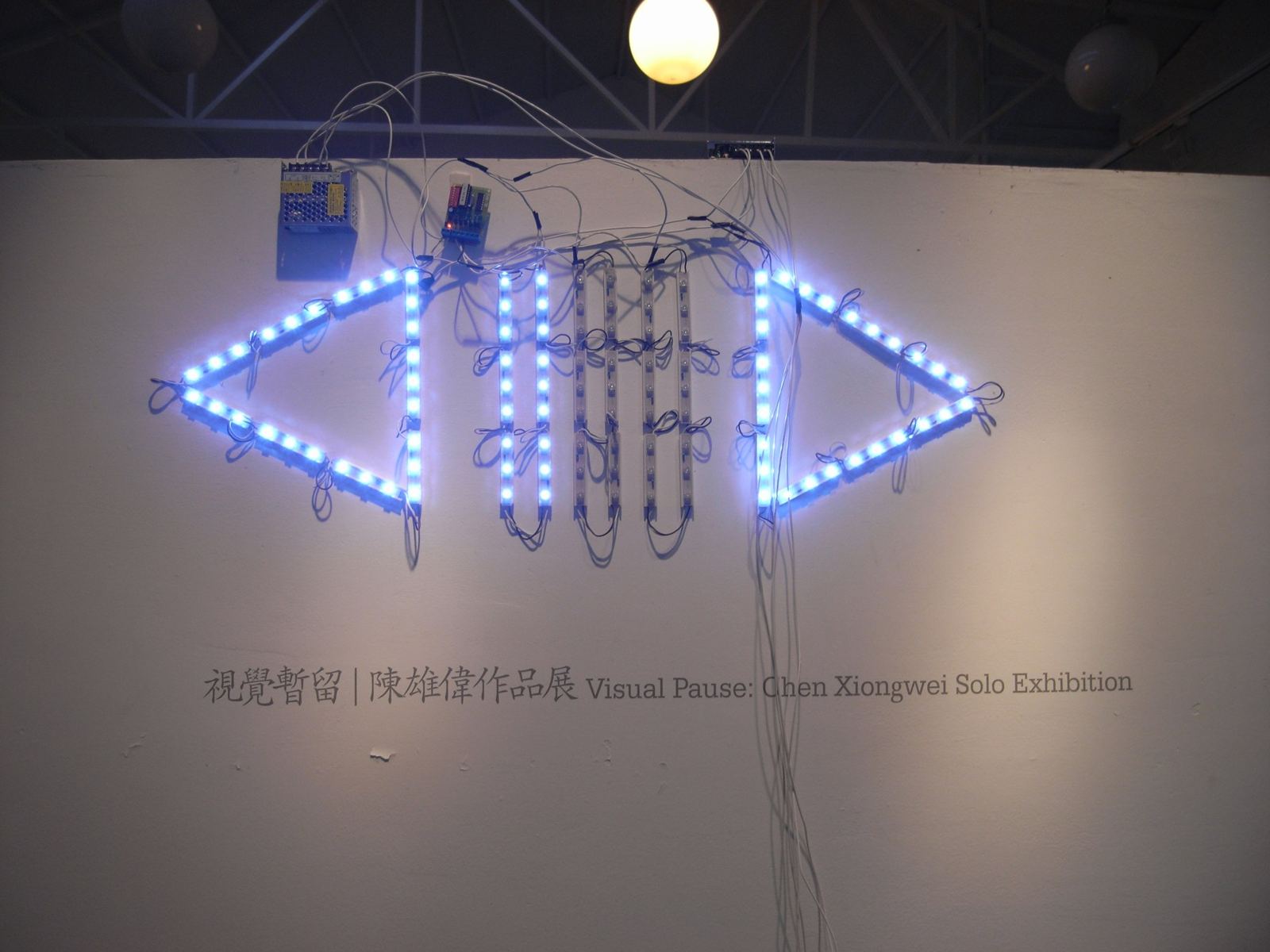
“视觉暂留”是人眼的一种生理现象。人眼在看东西的时候接受到光信号,由于视神经的反应速度的局限,光信号停止后仍然可以在视网膜上停留1/24秒的残留视像。“视觉暂留”是动画、电影等视觉媒体形成和传播的根据,古代中国人根据这种原理制造了“骑马灯”,现代人则利用其制作电影、动画。陈雄伟从字面上理解“视觉暂留”,认为自己的作品,便是对暂留在自己的视网膜上图像的记录。
“Persistence of vision” is a physiological phenomenon of the human eye. When we look at something, our eyes receive light signals. Because the optic nerve has a limited response speed, an afterimage can remain on the retina for one twenty-fourth of a second after the light signal ceases. Persistence of vision underlies the creation and transmission of visual media such as animation and cinema. In ancient China, this principle was used to make revolving lanterns with moving figures; today, it is used to make films and animations. Chen Xiongwei takes “persistence of vision” literally: he regards his works as records of the images that linger briefly on his own retinas.
陈雄伟的视觉系统是由他的肉眼、数码相机、计算机软件和视频硬件,以及他的大脑和刚好40年的生活经验构成的。他从2001年开始随身携带数码相机,随时将镜头对准他身边的街道、商店、餐厅、酒吧、夜总会、以及那里的朋友和陌生人,商品和物品。大多数时候他拍下的是照片,有时候是视频短片,相机已经换了好几个,每款都是各个年份最具代表性的小型卡片式相机(或可称为“平民街机”)。所以,他所得到的那些图像,无论是成像质量还是像素水准,从来都不属于专业级别。
Chen Xiongwei’s visual system consists of his eyes, digital cameras, computer software, video hardware, and his brain, together with exactly forty years of lived experience. Since 2001, he has carried a digital camera with him, ready to turn its lens toward the streets, shops, restaurants, bars, and nightclubs around him, as well as the friends and strangers, merchandise and objects found there. Most of the time he takes photographs; sometimes he shoots short videos. He has gone through several cameras, each a compact point-and-shoot model typical of its year—what one might call an everyday camera for everyone. Consequently, the images he produces have never been professional-grade, whether in image quality or pixel resolution.
从一开始,陈雄伟就在计算机上处理这些图像。他对静止的图片和运动的影像一视同仁,平面设计师的背景使他在素材面前表现出一种“美化”的本能,他喜欢的是洋气的颜色、具有冲击力的形状;因为经常与音乐人合作进行现场视频演出,在影像中,他还表现出对节奏和旋律的特殊感觉。
From the outset, Chen has processed these images on a computer. He treats still and moving images alike. His background as a graphic designer gives him an instinct to “beautify” his source material: he favors colors with a cosmopolitan flair and forms with a strong visual impact. His frequent collaborations with musicians in live video performances also reveal, in his moving images, a particular sensitivity to rhythm and melody.
与此同时,长年的中国城市生活体验和对中国当下现实的观察,又令他无法不发现并展示那些寻常的、快乐的、进步的事物背后的古怪、荒谬、残酷。他看见街景的丑陋,时尚生活的庸俗,在时代的表情里同时发现天真的快乐和肤浅的沾沾自喜。
At the same time, years of urban life in China and his observations of its contemporary realities compel him to discover and reveal the strangeness, absurdity, and cruelty behind things that appear ordinary, joyful, or progressive. He sees ugliness in the streetscape and vulgarity in fashionable lifestyles. In the expression of the age, he finds both innocent delight and shallow self-satisfaction.
陈雄伟喜欢在图像中加入自己的视觉符号,从最早的取自中国元素的蝌蚪、荷花,酷似他本人形象的头像剪影,到最近的更为抽象的加、减、勾、叉等符号。对他来说,那些符号即使美化图像以及在动画中营造节奏感的视觉元素,也是他对图像内容的态度和观点,是一种视觉语言的评注。
Chen likes to insert his own visual signs into his images. Early on, these included tadpoles and lotus flowers drawn from Chinese imagery, as well as silhouetted heads closely resembling his own. More recently, he has turned to abstract signs such as pluses, minuses, ticks, and crosses. For him, these signs are both visual elements that beautify an image and create a sense of rhythm in animation, and expressions of his attitude toward, and judgment of, the image’s content. They constitute a commentary in visual language.
在最近一个系列的尝试中,陈雄伟开始用一组同心圆线条的不同组合,扭曲、肢解和幻化他的图像。他故意模糊事物的轮廓、篡改真实的颜色,利用“视觉暂留”的原理,以一种近乎粗暴的方式制造视觉晕动,等待人们在眼花缭乱中,看见视觉背后的现实真相。
In a recent experimental series, Chen began using different arrangements of concentric circular lines to distort, dismember, and transfigure his images. He deliberately blurs the outlines of things and tampers with their actual colors. Working with the principle of persistence of vision, he creates a sense of visual vertigo in an almost brutal manner, waiting for viewers, amid the dazzling confusion, to glimpse the truth of reality behind what they see.
就这样,在美化和批判的双重本能的共同作用下,陈雄伟做出了那些漂亮而又时髦的“画”。他喜欢用“画”来称呼那些作品,然而它们真的是“画”吗?那些储存在计算机硬盘里的图像,可以被做成版画,也可以输出成相片,或是经过计算机软件和视频硬件的处理,变成动的影像,通过显示屏或投影仪来展示。有时候,通常是在与现场音乐发生合作的时候,当陈雄伟即兴创作了一段影像,又会通过截屏的方式,获得静止的图像。正是因为这种跨越媒体的工作方式,陈雄伟的视觉作品在显示器、印刷纸、相纸、甚至贴纸上,具备同等的表现力。
In this way, through the combined impulses to beautify and to critique, Chen Xiongwei creates his attractive, fashionable “paintings.” He likes to call these works “paintings”—but are they really paintings? Stored on computer hard drives, the images can be made into prints or output as photographs. Alternatively, computer software and video hardware can transform them into moving images presented on monitors or through projectors. Sometimes, usually when collaborating with live music, Chen improvises a sequence of moving images and then captures stills from it through screenshots. It is precisely this way of working across media that gives his visual works equal expressive power on monitors, printing paper, photographic paper, and even stickers.
这些图像,当它们变成“画”,很适合挂在客厅、办公室或其他空间的墙上,在现场表演中,它们是与音乐发生即兴对话的影像。它们为人们提供视觉上的纯粹美感,与此同时,当人们凝神细看,就会看到一些谈上不上“美”的东西,一些可笑、可叹、可思量的,通常被我们用“当代”来形容的“现实”。
When these images become “paintings,” they sit comfortably on the walls of living rooms, offices, and other spaces. In live performances, they enter into an improvised dialogue with music. They offer viewers pure visual pleasure. Yet a closer, more attentive look reveals things that can hardly be called “beautiful”: things that invite laughter, regret, and reflection—the “reality” we habitually describe as “contemporary.”
陈雄伟曾说:“正在发生的一切变化得太快了,如果不去记录下来,嗖的一声就过去了。”所以,在另一个场合,他又说过“我要用我的眼睛审视世界,将这个时代逐格播放。”
Chen Xiongwei once said, “Everything that is happening is changing too quickly. If we do not record it, it is gone in a flash.” On another occasion, he put it this way: “I want to examine the world with my own eyes and play back this era frame by frame.”
换句话说,他是在用图像和时间作斗争。
In other words, he is using images to struggle against time.
校注
第五篇中文按用户提供的文字保留。其中“即使……也是……”依上下文按“既是……也是……”的并列关系翻译;“谈上不上”按“谈不上”理解。英文未改写原文中的年代、年龄或视觉生理说明。
The Chinese of the fifth essay is retained as supplied. The phrase 即使……也是…… is interpreted contextually as the parallel construction 既是……也是…… (“both … and …”); 谈上不上 is read as 谈不上 (“can hardly be called”). Dates, age, and the description of visual physiology are translated as stated in the source.